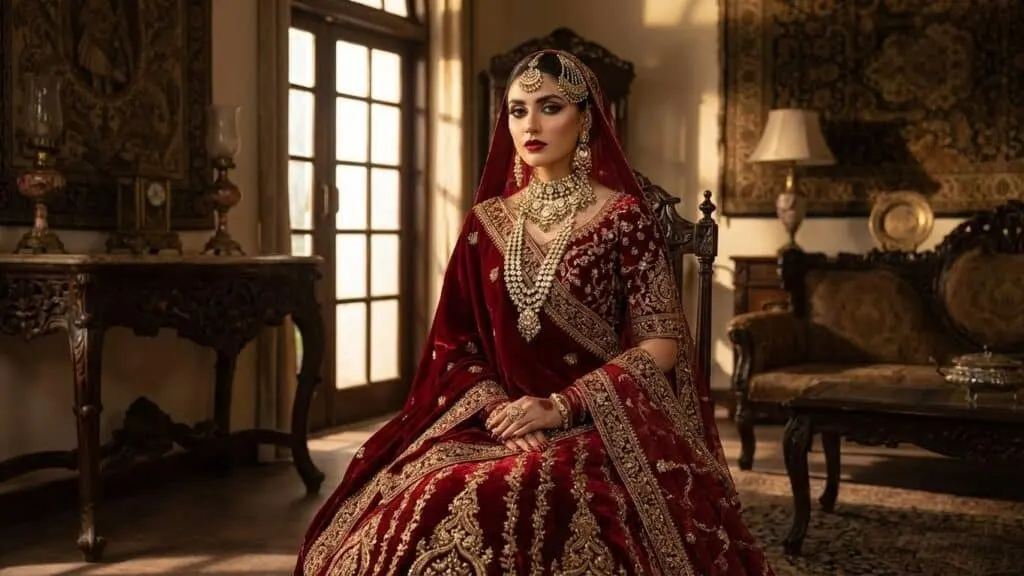
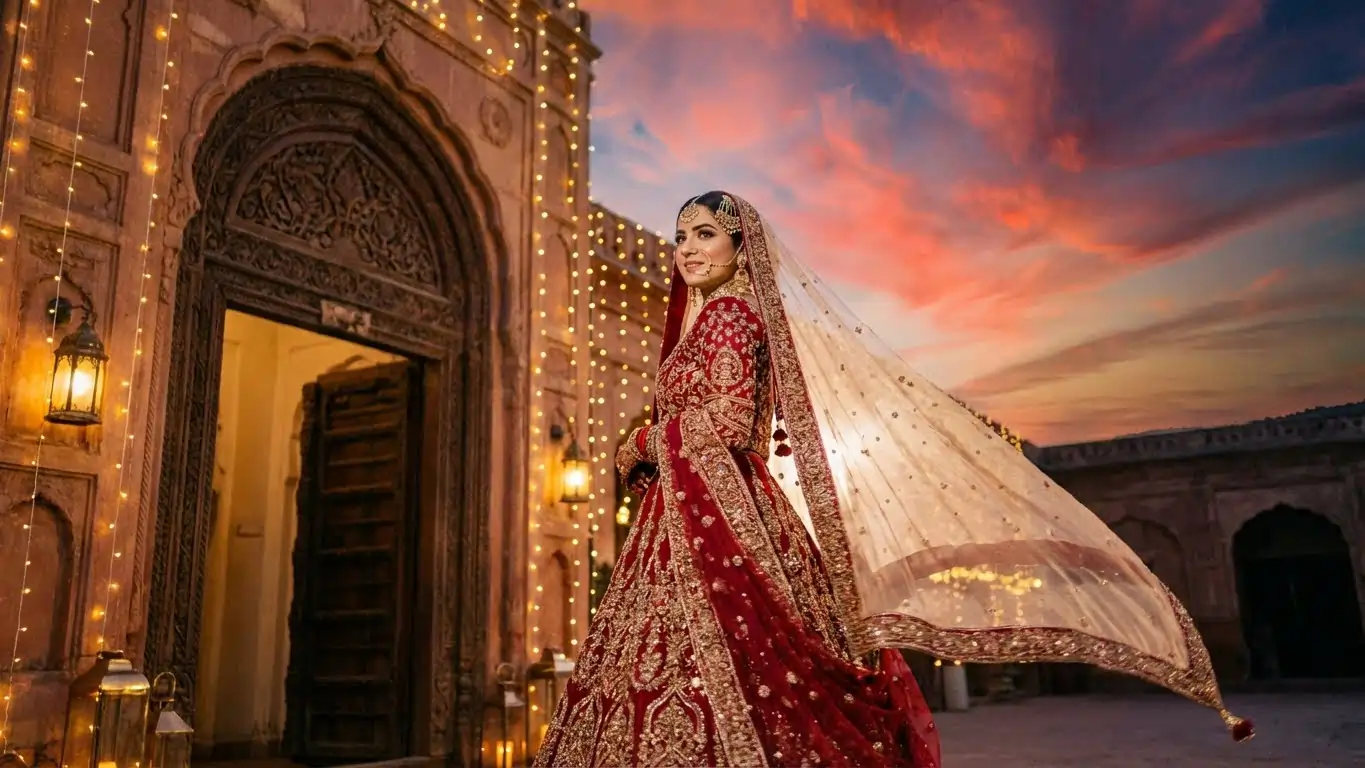
Mehndi is the most photogenic function of a Pakistani wedding and the hardest one to shoot well. Bright colours, constant movement, poor lighting and a crowd that never stands still. Here is what we have learned covering hundreds of mehndi functions across Multan, and what you can do as the family to help it go well.
Why Mehndi Is Technically Difficult
Everything that makes mehndi fun makes it hard to photograph. The function usually starts after sunset, so there is no natural light. Decorative lighting is warm orange or coloured, which throws skin tones off badly. People are dancing, so shutter speeds have to stay fast. And the whole thing happens in a crowded space where there is nowhere to stand back.
The solution is off-camera flash, bounced rather than pointed directly at people. Direct flash flattens faces and blows out the yellows and oranges that make mehndi look like mehndi. Bounced light keeps the atmosphere while still freezing the movement.
The Shots That Matter
If you take nothing else from this article, give this list to your photographer.
- Detail shots before guests arrive — the decor, the flowers, the mehndi cones and plates while everything is still perfect
- The mehndi being applied — close on hands, the artist working, the design taking shape
- The bride's entry — usually under a dupatta held by cousins, and it happens once
- The dholki circle — women singing and drumming, shot from slightly above if possible
- Dance performances — both the performers and, just as importantly, the audience reacting
- The mother's moment — feeding sweets, applying mehndi, or simply watching. This is the frame families cry over later
- Cousins and friends — the group photos everyone asks for the next day
- Hands at the end of the night — the finished design, once it has dried and darkened
Why a Female Photographer Changes the Night
Mehndi and dholki are largely women's events. When a male photographer is in the room, dupattas go up, the dancing stops and the energy that made the function worth photographing evaporates.
With a female photographer, none of that happens. Guests carry on, and the photographs show the evening as it actually was rather than a version of it edited for the camera. For most families in Multan this is not a preference, it is the difference between having mehndi photographs and not having them.
Four Things the Family Can Do
Keep some white or cream light near the stage
Decorators love coloured uplighting. It looks striking in person and it turns faces green on camera. Ask for at least some neutral light where the main action happens; you will notice the difference immediately in the photos.
Tell the photographer the running order
Which dance is first, when the bride enters, when the mehndi ceremony itself happens. A photographer who knows what is coming is standing in the right place already. One who does not is turning around after it has started.
Do the family group photos early
Before the food, before everyone scatters, while outfits are still fresh. Twenty minutes early in the evening saves an hour of chasing people at midnight.
Leave a path to the stage
The most common practical problem at a mehndi is that the photographer physically cannot reach the front. A metre of clear space along one side is all that is needed.
Outfits and Colour
Mehndi outfits are usually yellow, green and orange, which is wonderful for photographs. One thing to be aware of: heavily reflective sequins and mirror work bounce flash straight back and can create bright hotspots. It is not a reason to change your outfit, just something worth mentioning to the photographer so they can adjust their lighting angle.
Getting the Photos You Actually Want
Send your photographer three or four reference images of the style you like, a week before the function, not on the night. Styles differ enormously — some studios shoot bright and vibrant, others moody and warm. Agreeing that beforehand avoids the disappointment of receiving technically good photographs in a style you do not like.
You can see how we shoot mehndi and other functions in the gallery, or read what our wedding coverage includes.
Frequently Asked Questions
Do I need a separate photographer for the mehndi?
Not separate, but you do need someone who can work in low, coloured light and in a crowd. Many families book a female photographer specifically for mehndi and dholki because those functions are women only.
Why do mehndi photos often look orange or green?
Decorative and stage lighting at mehndi functions is usually coloured, and it tints skin tones. It is fixed by bringing in neutral lighting and correcting colour during editing, not by shooting on automatic settings.
How long should mehndi photography coverage be?
Three to four hours covers most mehndi functions, starting an hour before guests arrive so the decor and details can be photographed while everything is untouched.
Can you photograph a home dholki?
Yes, and home functions often produce the warmest photographs because everyone is relaxed. Space and lighting are tighter, so a female photographer used to working in crowded rooms makes a real difference.